

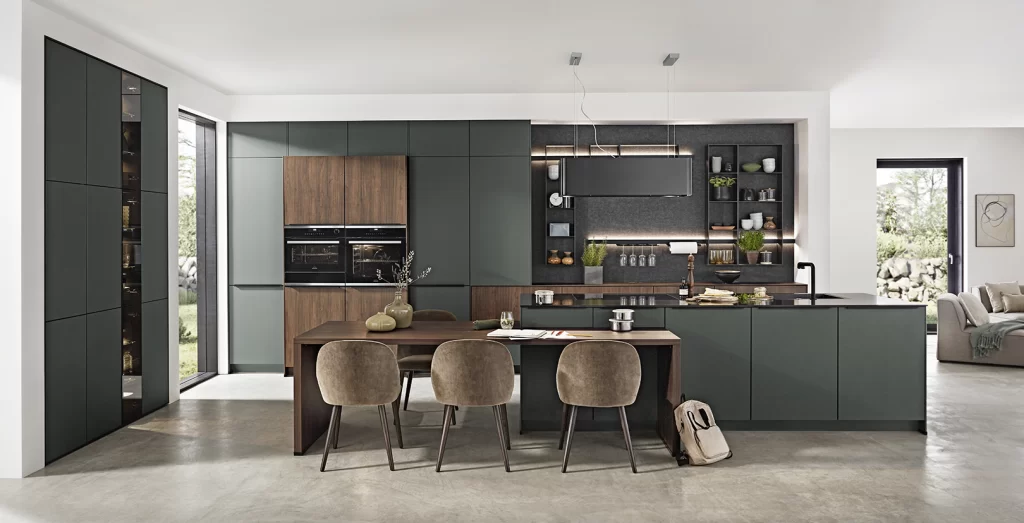
If you are planning a new kitchen, you will probably come across the term “German kitchen” fairly quickly. It is often associated with clean designs, carefully planned storage and furniture engineered for everyday use, but the description can still feel a little vague.
A German kitchen is not one particular style. It can be minimalist and handleless, warm and traditional, bold and colourful, or somewhere in between. What defines it is usually the furniture manufacturer, the way the cabinetry is produced and the modular system used to plan the room.
Understanding those differences can help you decide whether a German kitchen is right for your home, priorities and available budget.
What Is a German Kitchen?
The term generally refers to kitchen furniture designed and manufactured by a German brand. Rather than being built from scratch inside your home, the cabinets are produced as part of an established modular system and ordered to suit the chosen layout.
Customers can select from different cabinet dimensions, door finishes, colours, handles, internal storage and decorative details. A designer then combines those elements to create a kitchen suited to the room and the way it will be used.
This means a German kitchen can still feel highly personal. The furniture comes from a structured product range, but there are often enough sizes, finishes and configurations to create a tailored result.
Create German Kitchens works with three German kitchen furniture brands: Nobilia, Schüller and next125. Each sits at a different price point and offers its own collection of finishes, cabinet options and design features.
What Makes German Kitchens Different?
There is no single feature that applies to every model from every manufacturer. However, several characteristics are commonly associated with established German kitchen systems.
Modular Cabinetry
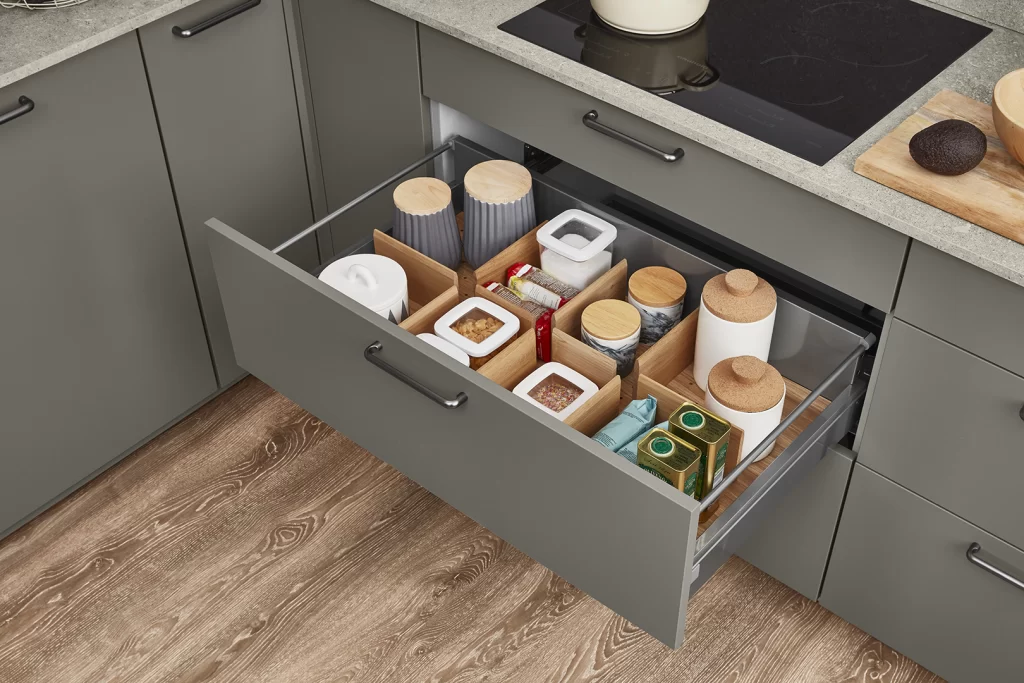
German kitchens are usually built around a wide selection of coordinated cabinet sizes. These can include base units, wall cabinets, tall housings, drawers, pull-outs and specialist storage.
A good designer can use these options to make better use of the available space. The aim is not simply to fit as many cupboards as possible, but to put storage, appliances and preparation areas where they make sense for the household.
Consistent Manufacturing
The cabinets and components are produced in a controlled factory environment. This helps manufacturers maintain consistency across door fronts, cabinet dimensions, drill points and fittings.
However, the country of manufacture is not the only factor that affects the finished result. Accurate measuring, thoughtful design and careful installation are equally important. Even well-made furniture needs to be planned and fitted correctly.
A Wide Choice Of Finishes
German kitchen ranges are not limited to glossy white handleless designs. Depending on the manufacturer and collection, customers may be able to choose from matt and gloss finishes, wood effects, textured surfaces, Shaker-style doors and a broad range of colours.
Worktops, handles, lighting and splashbacks can then be used to make the room feel contemporary, understated, traditional or more distinctive.
Integrated Storage And Appliances
The modular format allows appliances and storage to be included as part of the overall layout. Ovens can be positioned at a comfortable height, refrigeration can be concealed behind matching doors and drawer storage can be planned around the items used most frequently.
The appliances do not necessarily need to come from the same country as the kitchen furniture. What matters is choosing suitable models and accounting for their ventilation, installation and access requirements during the design process.
Are German Kitchens Worth The Money?
A German kitchen can be a worthwhile choice when its design, furniture specification and service suit your needs. It should not, however, be treated as automatically worthwhile simply because it carries a German brand name.
The value of any kitchen depends on what is included and how well it works for your household. A carefully planned mid-range kitchen may offer better value than a more expensive design filled with features you rarely use.
When comparing quotations, consider:
- The furniture manufacturer and specific collection
- The cabinet construction, finishes and internal fittings
- The number and type of storage units included
- The appliance models and their warranties
- The worktop material and fabrication requirements
- Delivery, installation and waste removal
- Any electrical, plumbing, plastering or building work
- The design support and aftercare provided
An itemised quotation makes it easier to understand where the budget is being spent and compare different proposals fairly.
Are German Kitchens Better Than British-Made Kitchens?

It would be misleading to say that every German kitchen is better than every kitchen made in the UK. Both countries have manufacturers producing furniture at different price points and standards.
The fairest approach is to compare the actual products rather than relying on the country name alone. Look at the cabinet construction, hinges, drawer systems, available sizes, finishes, warranty information and overall quotation.
You should also consider the company designing and installing the kitchen. A well-planned layout should account for how you cook, how many people use the room, what needs to be stored and whether the kitchen forms part of a larger living space.
Installation matters too. Cabinets need to be level, worktops must be measured and fitted accurately, and services need to be positioned correctly. The finished kitchen is a combination of the manufactured furniture and the work completed in your home.
How Much Does A German Kitchen Cost?

Create German Kitchens currently designs kitchens across an indicative range of approximately £7,000 to £50,000. The eventual cost will depend on the furniture brand, room size, number of cabinets, chosen appliances, worktops and level of installation support.
A compact kitchen using an accessible furniture range and straightforward worktop will naturally cost less than a large open-plan design with an island, premium cabinetry, specialist surfaces and several integrated appliances.
It is therefore helpful to set a realistic overall budget before the design begins. Remember to account for any structural work, flooring, decorating or changes to plumbing and electrics, rather than considering the cabinetry price in isolation.
The kitchen pricing guide provides more information about the factors that can affect the cost of a new kitchen.
What Should You Look For Before Buying?
Visiting a showroom gives you the opportunity to inspect the furniture properly. Open the drawers, compare door finishes and look at how the internal storage works. A colour or texture that looks right on a screen can feel very different when viewed at full size and under natural light.
You should also ask the designer to explain:
- Which manufacturer and furniture range is being quoted
- What is included in the installation service
- Whether the kitchen is supplied assembled or flat-packed
- Which items are excluded from the quotation
- What preparation work is required before delivery
- The expected ordering and installation timescales
- How problems or damaged components will be handled
Looking through examples of completed kitchen projects can also help you understand how different furniture ranges, layouts and finishes work in real homes.
Is A German Kitchen Right For Your Home?
A German kitchen may be a good fit when you want plenty of design choice, a carefully organised layout and furniture produced within a coordinated system. It can suit both compact kitchens and larger open-plan spaces, provided the chosen range works with the room and budget.
The most important step is finding a design that supports daily life. Consider who uses the kitchen, how often you cook, whether you entertain, what causes frustration in the current room and which features would make the biggest practical difference.
Create German Kitchens offers design, supply-only and fully managed installation services from its showroom in Gomersal. To discuss your ideas, compare the available furniture ranges or arrange a showroom appointment, contact the team for an initial conversation.