


Waiting for the kettle to boil may only take a few minutes, but it is one of those small interruptions that happens repeatedly in a busy kitchen. A Quooker provides boiling water directly from the tap, allowing you to prepare drinks, fill pans and tackle other everyday jobs without using a separate kettle.
That convenience is appealing, but a Quooker is a significant addition to a new kitchen. It requires space beneath the sink, an electrical supply and a higher initial budget than a conventional tap.
Understanding how the system works, what the different options provide and how you would use it can help you decide whether a Quooker tap is worth including in your kitchen design.
What Is A Quooker Tap?
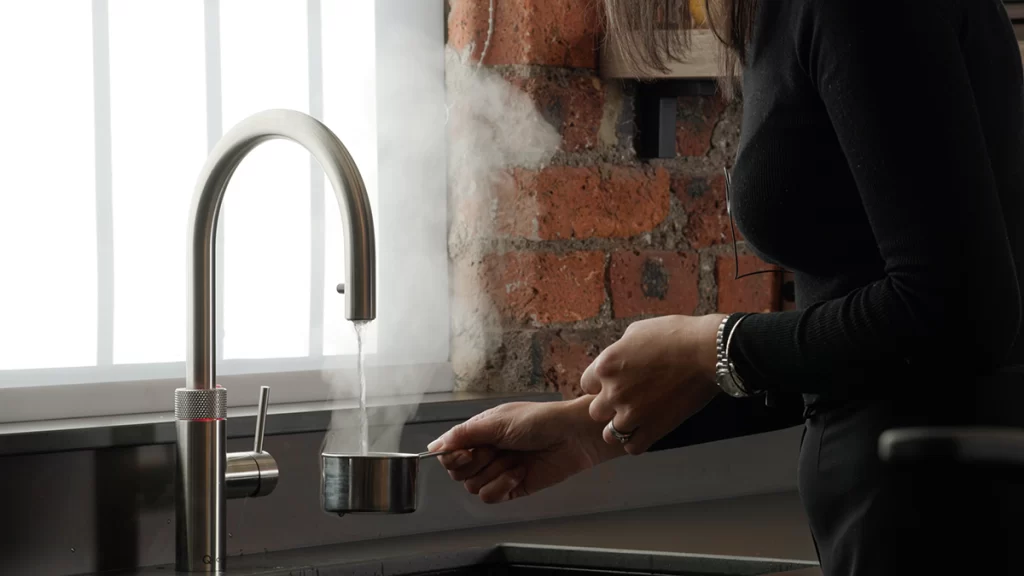
A Quooker is a kitchen tap connected to an insulated tank installed inside the sink cabinet. The tank stores water at 100°C so boiling water is available without waiting for a kettle or pan to heat.
Depending on the chosen tap and tank combination, the system can provide:
- Instant 100°C boiling water
- Normal hot and cold water
- Filtered chilled still water when a CUBE is added
- Filtered chilled sparkling water when a CUBE is added
Not every Quooker installation provides all five options. The functions available depend on the tap, boiling-water tank and whether the optional CUBE has been included.
How Does A Quooker Work?
Cold mains water enters the under-sink tank, where it is heated and stored under pressure. The tank is heavily insulated to limit heat loss while the water is waiting to be used.
When boiling water is dispensed, fresh water enters the tank and is heated ready for the next use. The amount available at one time and the recovery period depend on the chosen tank.
Different tank configurations are available according to the kitchen’s existing hot-water supply and the amount of boiling water required. The correct option should be selected during the design process rather than after the sink cabinet and services have been finalised.
What Can You Use A Quooker For?
The most obvious use is preparing tea or coffee, but instant boiling water can also be useful for:
- Filling a saucepan before cooking pasta, rice or vegetables
- Blanching vegetables
- Preparing stock, gravy and instant foods
- Warming plates or serving dishes
- Removing stubborn residue from cookware
- Preparing hot water for cleaning tasks
The time saved during one task may be modest, but the convenience becomes more noticeable in households that boil the kettle several times throughout the day.
It is important to remember that the boiling-water tank has a defined capacity. A Quooker can refill and reheat, but it does not provide an unlimited amount of boiling water all at once.
What Are The Benefits Of A Quooker?
Boiling Water Is Immediately Available
The main benefit is convenience. There is no need to fill a kettle, wait for it to boil and then carry it across the kitchen.
This can make everyday cooking and drink preparation feel more efficient, particularly during busy mornings or when several dishes are being prepared at once.
It Can Free Up Worktop Space
Replacing a kettle removes another appliance from the worktop. This may be particularly useful in a compact kitchen or in a streamlined design where keeping surfaces clear is a priority.
The equipment has not disappeared completely, however. The Quooker tank is housed beneath the sink, so some cupboard space must be allocated to it.
One Tap Can Perform Several Jobs
Models such as the Fusion and Flex can provide ordinary hot, cold and boiling water from one tap. This removes the need for a separate boiling-water tap beside the main mixer.
The Quooker Flex also includes a pull-out hose for rinsing the sink and filling cookware. Boiling water cannot be dispensed while the hose is extended.
It Can Support A Dedicated Drinks Area
A Quooker can be incorporated into a coffee station, breakfast cupboard or drinks area. Bringing the tap, mugs, tea, coffee and other supplies together can keep people away from the main cooking zone while preparing drinks.
The location still needs suitable plumbing, power and under-counter storage. It should therefore be planned alongside the other kitchen appliances rather than added as an afterthought.
What Is The Quooker CUBE?
The Quooker CUBE is an optional unit that adds filtered chilled still and sparkling water to a compatible Quooker system.
It is installed in the sink cabinet alongside the boiling-water tank and connects to a Quooker CO₂ cylinder. The cylinder provides approximately 60 litres of sparkling water before it needs to be replaced, although the eventual amount can vary with use.
The CUBE may appeal to households that regularly drink chilled or sparkling water and want to reduce the number of bottles stored in the fridge. It also means drinks can be prepared from one tap rather than using a separate water filter or sparkling-water appliance.
There are some ongoing requirements to consider:
- The CUBE occupies additional space beneath the sink
- It requires a suitable power supply
- Its filters require periodic replacement
- Replacement Quooker CO₂ cylinders are needed for sparkling water
- The unit needs ventilation within the cabinet
These details should be included in the design so the sink cabinet remains accessible and there is sufficient room for plumbing, waste fittings and any other equipment.
Are Quooker Taps Energy Efficient?
A Quooker keeps water hot continuously, but its tank uses vacuum insulation to reduce heat loss. Quooker currently states that the standard boiling-water system loses around 10 watts of energy while on standby.
Actual household energy use will depend on the chosen tank, how frequently the tap is used and whether accessories such as the CUBE are installed.
Comparing a Quooker directly with a kettle is not straightforward. A kettle can be efficient when only the required amount is boiled, but many people habitually overfill it or reboil water. A Quooker avoids repeated kettle boiling, although it continues to use a small amount of energy while on standby.
The fairest comparison is therefore based on your own habits. A household that uses boiling water regularly may gain more practical value from the system than someone who only makes an occasional hot drink.
Adding a CUBE may reduce reliance on bottled still and sparkling water, but it would be too broad to claim that every installation automatically reduces a household’s environmental impact. Manufacturing, electricity use, filter replacement, CO₂ cylinders and existing drinking habits all need to be considered.
Are Quooker Taps Safe?
A Quooker dispenses water at 100°C, so it must always be used carefully. The tap incorporates several features intended to reduce the risk of accidental operation.
Boiling water is activated using a deliberate push-and-turn control rather than the normal mixer handle. A light around the control indicates when boiling water is being dispensed, and the water leaves the tap as a fine, aerated flow rather than a solid jet.
The tap is also designed so that it cannot be knocked over like a kettle. However, none of these features removes the need for adult supervision and sensible use, particularly where children or vulnerable people are present.
Everyone in the household should understand which control dispenses boiling water. Children should not be encouraged to operate it unsupervised.
Which Quooker Tap Should You Choose?
The right model depends on the functions you need and the way you use the sink.
Quooker Fusion
The Fusion combines boiling, hot and cold water within one tap. It is available in round and square designs and suits customers who want to replace their conventional mixer with a single fitting.
Quooker Flex
The Flex also provides boiling, hot and cold water but adds a flexible pull-out hose. This can make rinsing the sink, washing produce and filling larger containers more convenient.
The boiling-water function is disabled when the hose is pulled out, helping to keep the two functions separate.
Quooker Front
The Front has its normal hot and cold control positioned near the front of the spout. Its appearance and control position may suit customers who prefer a more distinctive contemporary design.
Separate Quooker Taps
A separate boiling-water tap can be installed alongside an existing mixer. This may be useful where the customer wants to retain a particular conventional tap or prefers a dedicated fitting for boiling water.
Quooker taps are available in different shapes and finishes. It is worth comparing them with the cabinet handles, sink and other metal finishes rather than selecting each component independently.
What Should Be Planned Before Installation?

A Quooker needs to be considered before the kitchen is ordered because it affects the sink cabinet and nearby services.
The design should account for:
- The dimensions of the chosen tank
- Additional room for a CUBE, where required
- Accessible electrical sockets
- The location of the water supply and waste pipes
- Space for cleaning products and waste bins
- Access for filter changes and future servicing
- The sink material and tap-hole requirements
Trying to fit a tank, CUBE, waste system, pull-out bin and household supplies into one small cabinet can make maintenance difficult. The designer may recommend relocating storage or choosing a different cabinet width to give the equipment enough room.
Looking at the client’s completed kitchen projects can help you see how Quooker taps have been paired with different sinks, worktops and cabinet finishes.
What Maintenance Does A Quooker Need?
The tap should be cleaned using products suitable for its particular finish. Abrasive cleaners and scouring pads may damage or alter the surface.
Maintenance requirements vary according to the tank, local water conditions and whether a CUBE is installed. The CUBE uses filters that require replacement, while its CO₂ cylinder will need changing when the sparkling-water supply runs low.
Any servicing, replacement parts or fault diagnosis should follow Quooker’s current instructions. Using unapproved components could affect the operation of the system or its warranty.
Are Quooker Taps Worth The Cost?
A Quooker may be worthwhile when boiling water is used frequently and the convenience would make a genuine difference to your routine. It can also be useful when you want a clear worktop, an integrated drinks station or chilled and sparkling water from the same tap.
It may offer less value to someone who rarely uses boiling water, is happy with a kettle or would prefer to keep the sink cabinet available for storage.
Before deciding, consider:
- How many times the kettle is normally boiled each day
- Whether the system will replace other appliances or bottled drinks
- Which water functions you would regularly use
- The available space beneath the sink
- The initial purchase and installation cost
- Ongoing filter, CO₂ and servicing requirements
The aim should not be to include technology simply because it is available. It should earn its place by making the kitchen work better for your household.
Explore Quooker Options For Your New Kitchen
Create German Kitchens supplies and installs Quooker taps as part of its wider kitchen design service. Planning the tap alongside the sink, worktops, cabinetry and electrical requirements helps ensure the right equipment is selected and properly accommodated.
Models, finishes, promotions and warranty terms can change, so these should be confirmed when your kitchen is being specified. To compare the available options or arrange an appointment at the Gomersal showroom, contact the team.