“`html

A kitchen extractor is essential for dealing with cooking vapours, airborne grease and lingering smells. Traditionally, this has meant fitting a hood above the hob, but a BORA venting hob takes a different approach by bringing cooking and extraction together within the worktop.

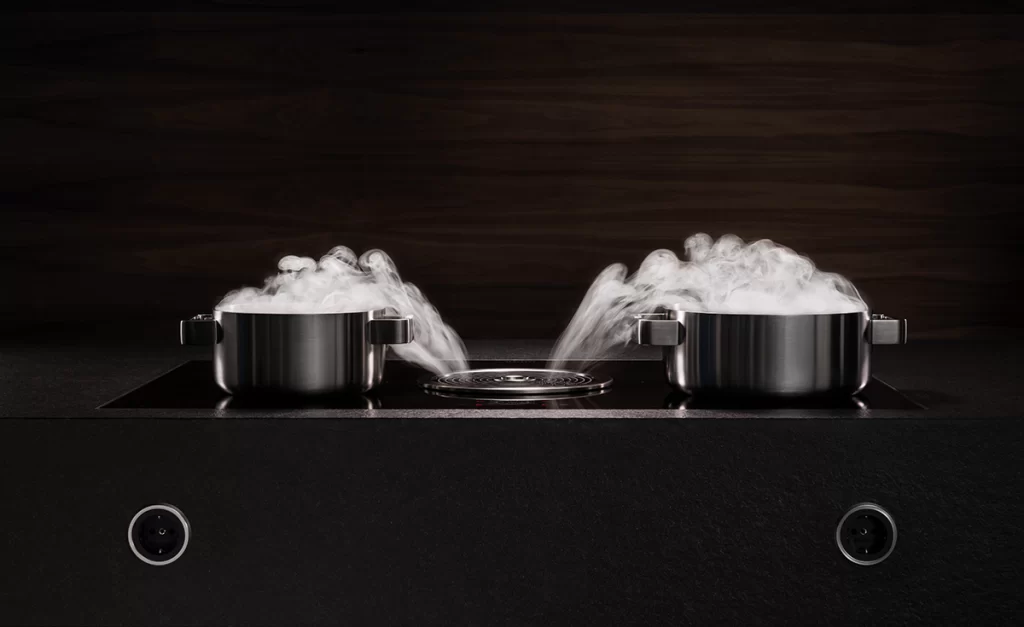
Instead of allowing steam to rise towards an overhead extractor, the system draws it down through an opening in or beside the cooking surface. This can keep sightlines clear and give designers greater freedom when positioning the hob.

BORA systems offer several advantages, particularly in islands and open-plan kitchens. However, they also require careful planning, take up some cabinet space and are not necessarily the right choice for every household.

What Is A BORA Venting Hob?

A BORA venting hob combines a cooktop with an integrated extractor. Cooking vapours and grease are captured close to the pans before the air is either filtered and returned to the room or directed outside.

The extractor sits at worktop level rather than above the cooking surface. This means there is no need for a conventional wall-mounted, ceiling-mounted or island extractor hood.

BORA produces compact and modular systems. The most suitable type will depend on the available space, cooking preferences and kitchen budget.

Compact BORA Systems

A compact system combines four cooking zones and an extractor within one appliance. The hob and extraction controls are integrated into the cooking surface, making this a relatively straightforward way to include downdraft extraction.

Compact options include different sizes and cooking-zone arrangements. Some are designed for standard-width cabinets, while others provide a wider cooking surface or flexible induction zones.

Modular BORA Systems

BORA Classic and Professional systems provide more freedom to combine separate cooktops with an extractor. Depending on the selected range, options can include surface induction, conventional induction, gas, a wok cooktop or a Tepan stainless-steel grill.

This may suit keen cooks who want a more specialised arrangement, although the system generally requires more space and a higher budget than a compact appliance.

Create German Kitchens can help customers compare the available BORA kitchen appliances alongside the wider kitchen layout.

How Does A BORA Hob Extract Steam?

Hot air and cooking vapours naturally rise, but the extractor creates a cross-flow that draws them sideways and downwards into the appliance.

A grease filter captures airborne grease particles before the air continues through the system. What happens next depends on whether the kitchen uses recirculation or exhaust air.

Recirculation

In a recirculating installation, the air passes through a grease filter and an activated charcoal filter. It is then released back into the kitchen.

This avoids the need to create a duct through an external wall, roof or floor, which can make recirculation more practical in certain properties. The activated charcoal filter must be replaced periodically to maintain effective odour filtration.

Replacement intervals vary according to the BORA model and filter system. The appliance’s filter service indicator will normally show when attention is required, but owners should still follow the operating instructions for their particular system.

Exhaust Air

An exhaust-air system channels the extracted air outside through ducting and a suitable wall, roof or floor outlet.

This removes moisture as well as filtered cooking air from the room, but installation can be more involved. The route, length and size of the ducting all need to be considered, along with the position of joists, external walls and other structural features.

The decision between recirculation and exhaust air should be made during the kitchen design stage. Trying to add external ducting after cabinetry and building work have been planned may restrict the available options.

What Are The Benefits Of A BORA Hob?

A Clear View Across The Kitchen

Removing the extractor hood can preserve an uninterrupted view across an island or peninsula. This is particularly useful in an open-plan room where the person cooking wants to remain connected with family members or guests.

It can also prevent a large overhead appliance from becoming the dominant feature in the room.

More Freedom To Position The Hob

A conventional extractor needs to be installed above the cooking surface at an appropriate height. A venting hob removes that requirement, potentially allowing the hob to be placed beneath a window or on an island where a suspended hood would feel intrusive.

The position still needs to account for electrical supplies, ventilation, worktop depth and safe distances from surrounding furniture.

Cooking And Extraction Share One Control Area

Depending on the model, the extractor can be controlled from the hob’s touch display or dedicated control knobs. Some functions can adjust extraction in response to the cooking settings, reducing the need to alter the fan manually throughout the meal.

Controls differ between BORA ranges, so it is worth trying the appliance before deciding which arrangement feels most intuitive.

Removable Parts Make Routine Cleaning Easier

The air inlet and grease-filter components can be removed from above the hob on current BORA cooktop extractor systems. These removable parts can generally be cleaned in a dishwasher, although the instructions for the individual model should always be followed.

This gives the user direct access to the area where grease and cooking residue are most likely to collect.

The glass cooking surface should be cleaned using products suitable for ceramic or induction hobs. A damp cloth alone may not remove burnt-on food, grease or mineral deposits, so it is important to follow BORA’s care guidance rather than relying on one cleaning method for every mark.

It Can Work Well In An Open-Plan Kitchen

Extractor noise is particularly noticeable when the kitchen shares a room with dining and seating areas. With a BORA system, the extraction point is below head height and incorporated into the furniture rather than suspended above the cook.

Actual sound levels depend on the appliance, fan setting, ducting, installation and surrounding cabinetry. No extractor is silent, particularly when operating at its highest setting.

Does A BORA Hob Take Up Cupboard Space?

A venting hob requires room beneath and around the cooktop for the extractor mechanism, airflow and, where applicable, ducting or filters.

Modern compact systems are designed to preserve more usable storage than earlier downdraft extractors, but some cabinet capacity may still be affected. The exact impact depends on the BORA model and how the kitchen is configured.

Possible considerations include:

  • Reduced drawer depth beneath the hob
  • Space for recirculation filters
  • A route for exhaust-air ducting
  • Ventilation within or behind the cabinet
  • Access for cleaning and filter replacement
  • The position of electrical connections

A kitchen designer should show what storage will remain beneath the appliance rather than discussing the hob independently of the furniture.

Can A BORA Hob Cope With Tall Pans?

Because extraction takes place at worktop level, customers sometimes wonder whether steam from a tall pan will escape into the room.

The system is designed to capture cooking vapours close to where they arise. Performance will still be affected by how the hob is used, including pan position, lid placement, fan setting and strong draughts from nearby doors or windows.

Positioning a lid at an angle can help guide vapour towards the extractor. Appropriate fan settings should also be selected when boiling several pans or cooking food that produces significant steam.

What Happens If Liquid Enters The Extractor?

Spills can happen when pans boil over or liquid is knocked across the hob. BORA systems include removable filter components and collection areas that allow a certain amount of liquid to be recovered from above.

The capacity varies between models, so it should not be assumed that every system can contain the same volume. A spill should be dealt with promptly and the relevant cleaning instructions followed before the appliance is used again.

Large spills or any concerns about liquid reaching inaccessible parts of the appliance should be handled according to BORA’s service guidance.

What Maintenance Does A BORA Hob Need?

Routine maintenance involves cleaning the glass surface, air inlet, filter tray and grease filter. Allowing grease to build up can reduce extraction performance and make the components more difficult to clean.

A recirculating system will also need replacement activated charcoal filters. The interval depends on the appliance and filter type, with current BORA systems ranging from approximately 150 to 600 operating hours between changes.

The appliance should display a filter service warning when the relevant interval is reached. Replacing or resetting filters should be completed in accordance with the instructions for the exact model.

Exhaust-air systems do not use the same recirculation odour filter, but their grease filters and accessible extractor components still need regular cleaning.

Are There Any Disadvantages?

A BORA hob can be an excellent addition to the right kitchen, but there are compromises to consider.

  • Initial cost: A venting hob will usually cost more than a basic induction hob and separate entry-level extractor.
  • Cabinet space: The extraction system, filters or ducting can reduce storage beneath the hob.
  • Installation planning: Power, ventilation and duct routes must be considered early.
  • Replacement filters: Recirculating models have an ongoing filter cost.
  • Combined appliance: The hob and extractor form one central cooking system, so servicing requirements can affect a particularly important part of the kitchen.
  • Limited overhead extraction: Homeowners who prefer the appearance or lighting provided by a statement extractor hood may not benefit from removing it.

These points do not make a BORA system unsuitable, but they should form part of the decision rather than being discovered after the kitchen has been ordered.

Is A BORA Hob Worth It?

A BORA hob may be worth considering when you want to position the cooking area on an island, preserve clear sightlines or avoid a conventional extractor above the worktop.

It may also suit households that value integrated controls, removable filter components and a coordinated cooking and extraction system.

A separate hob and extractor might offer better value where the budget is more restricted, cupboard storage is a priority or the existing kitchen already has a suitable external extraction route.

Before deciding, consider:

  • Where the hob will be positioned
  • Whether the room suits recirculation or exhaust air
  • How much cupboard storage can be allocated to the system
  • The type and number of cooking zones required
  • How frequently replacement filters will be needed
  • The initial appliance and installation cost
  • Which controls feel most comfortable to use

It is also helpful to see a system in person, listen to it running and examine how the components are removed for cleaning.

Plan The Hob As Part Of The Whole Kitchen

A BORA hob should not be selected in isolation. Its size, extraction method and installation requirements affect the worktop, base cabinets, electrical supply and wider room layout.

Create German Kitchens supplies BORA alongside other kitchen appliance brands and can help compare the available systems during the design process. You can also browse its completed kitchen projects to see how venting hobs have been incorporated into different layouts.

To discuss whether a BORA system would work in your room or arrange a visit to the Gomersal showroom, contact the team.

“`